

AI Tattoo Generator & Maker
GLOBAL SOFT .LTD
I approached AI Tattoo Generator & Maker as someone who had an idea for a tattoo but no clean way to turn that idea into something I could actually discuss with a tattoo artist. That starting point matters: this is not a drawing course or a replacement for professional tattooing. It is an Art & Design app from GLOBAL SOFT .LTD that helps move a vague concept toward a visual reference, with AI creation, an augmented-reality preview, and a stencil-making step in the same workflow.
The app is free, rated for Everyone, and works on Android devices running version 8.0 or later. It has reached over 50 thousand installs, which makes it feel like a relatively focused tool rather than a huge social platform. I used the current version, 1.0.6, with that expectation: useful for exploring and communicating an idea, but still something I would treat as an early design aid rather than a final authority on how a tattoo will look on skin.
From a vague idea to a workable tattoo reference
Starting with the right kind of brief
The quality of the first result depends heavily on how clearly I describe what I want. Saying “a cool tattoo” gives the app very little to work with. I got more useful direction by thinking in layers: subject, mood, visual style, placement, and the level of detail I could realistically live with. For example, a small botanical design needs a different brief from a large blackwork animal, even if both begin with the same general idea of “nature.”
I also found it helpful to decide what the tattoo should communicate before asking for decoration. A memorial symbol, a travel reminder, and a purely ornamental piece may all use the same object, but the emotional emphasis changes the design. That preparation is one of the less obvious strengths of this kind of tool: it forces me to make choices before I sit in front of an artist and discover that my idea is still only a mood.
My practical advice is to begin with constraints, not adjectives. Mention whether the design should be simple or intricate, whether it needs to remain readable at a small size, and whether you want a clean outline or stronger shading. This does not guarantee a perfect result, but it makes the generated concepts easier to compare and revise.
Related News

Why WhatsApp Messenger Still Makes Everyday Communication Feel Easy

Jurassic World: The Game Is the Better Dino Tycoon for Strategic Players

Threads in Real Life: Who Should Join, Lurk, or Leave

How SHEIN Turned Shopping Into an Endless Content Feed

How to Make Fortnite Feel Smarter on Mobile

Should You Switch to Microsoft Outlook on Mobile?
Generating several directions instead of chasing one perfect image
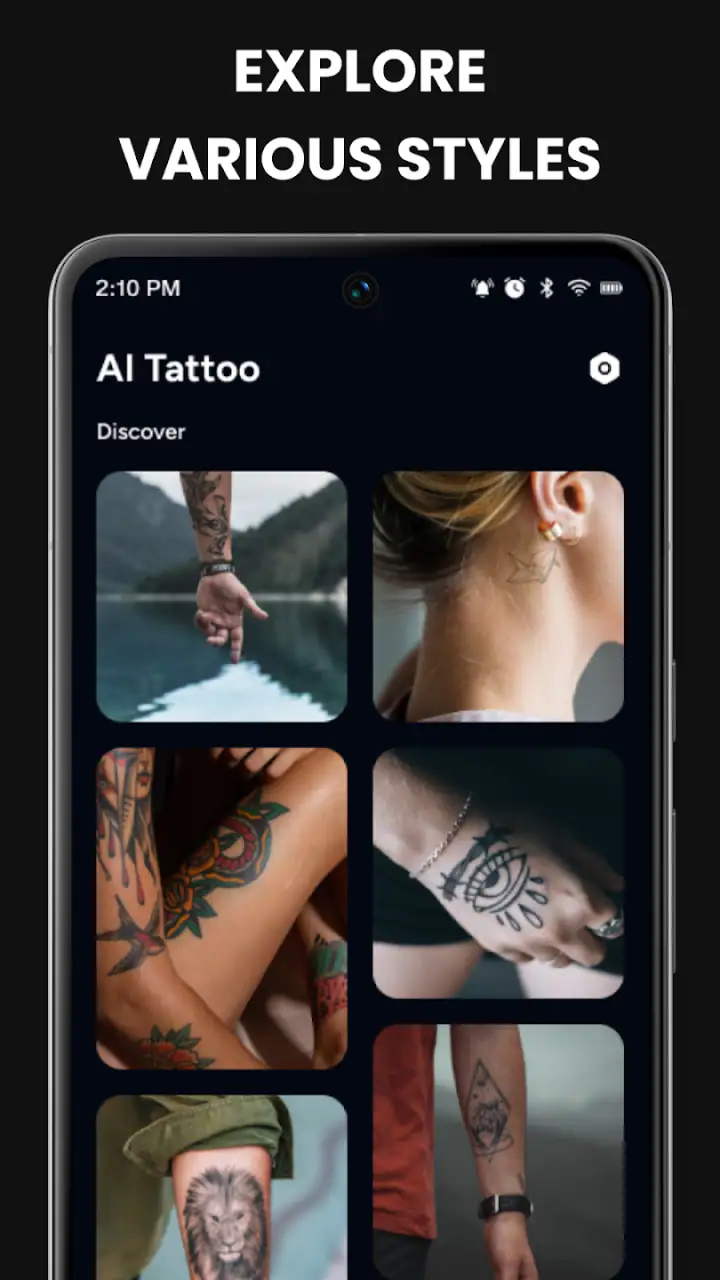
The AI generator is most useful when I treat its output as a sketchbook of possibilities. I would not expect the first concept to be ready for a tattoo chair. Instead, I look for parts worth keeping: the silhouette of an animal, the arrangement of leaves, the balance between open skin and ink, or the way a symbol is framed.
This approach also prevents a common mistake. A visually impressive digital image can contain tiny gaps, crowded details, or decorative elements that will not age well when translated into ink. I use the generated design to identify a direction, then mentally strip away anything that seems too delicate, too busy, or difficult to explain. The best result is often not the most elaborate one; it is the one whose main shape remains clear when I imagine it at the intended size.
For someone who already draws, the app can act as a prompt generator. For someone who does not draw, it offers a way to bring a conversation starter to a studio. In both cases, the important handoff is from “AI image” to “human design decision.” I would show the concept to a tattoo artist as reference material, not ask the artist to reproduce it without review.
Gallery
Using the AR preview with realistic expectations
The augmented-reality try-on is the part I find most useful for people who struggle to picture scale and placement. A design that looks balanced on a blank screen can feel too large on a forearm, too close to a joint, or oddly oriented on the shoulder. Seeing it over the body gives me a faster sense of whether the general position feels natural.
I use this stage to answer practical questions rather than emotional ones. Does the design follow the direction of the arm? Does it look cramped near a bend? Would the main symbol still be visible when the body moves? Is the composition facing the viewer or only making sense from one angle? These checks are more valuable than simply asking whether the overlay looks impressive in a single pose.
AR should still be treated as an approximation. Lighting, camera angle, skin movement, and the shape of the body can all change the impression. The preview helps with placement and proportion, but it cannot reproduce the final behavior of ink, healing, aging, or the texture of real skin. I would use it to reject obviously awkward ideas, not to approve a design without professional advice.
Turning the chosen concept into a stencil
The stencil maker creates a useful bridge between imagination and execution. Once I have chosen a direction, a stencil-style version encourages me to focus on the lines that actually carry the design. This is where I notice whether the concept depends too much on soft color, tiny texture, or complicated shading.
I would use the stencil output as a discussion aid with an artist. It can help communicate the intended outline and show which elements I consider essential. However, a stencil is not the same thing as a professionally prepared tattoo transfer. Line weight, spacing, symmetry, skin placement, and technical adjustments still belong to the tattooist. That distinction is important for first-time users, because a clean-looking digital outline can create false confidence.
A useful workflow is to keep two versions in mind: the expressive concept and the simplified stencil. If the design loses its identity when simplified, I would revise the concept before booking an appointment. If the stencil remains recognizable, that is a better sign that the idea has a strong visual foundation.
The handoff from phone screen to tattoo studio
The app’s real value appears at the handoff. Instead of saying “I want something mystical with flowers,” I can bring a generated reference, an AR impression of placement, and a stencil-like interpretation. That gives the artist more material to question and improve. I can explain what I like, what I want removed, and which parts are only examples.
I would also prepare a short verbal brief before the appointment. I would identify the central subject, the preferred mood, the approximate body area, and the elements that must remain. Then I would make it clear that the artist has permission to redraw the design for skin. This avoids treating the app’s output as a fixed instruction and leaves room for professional changes that improve longevity and fit.
This handoff is especially helpful for people who become nervous when describing visual ideas. The image gives both sides something concrete to point at. It also exposes disagreements early: perhaps I like the symbol but not the surrounding decoration, or perhaps the artist sees that a particular detail will disappear at the chosen size. In that sense, the app is less a final design machine and more a communication tool.
A realistic everyday scenario
Imagine I want a small tattoo connected to a hiking trip, but I only know that I want a mountain, a plant from the route, and a quiet rather than aggressive feeling. I can use the generator to explore whether the idea works better as a simple outline, a framed emblem, or a more illustrative composition. I can then place the preferred direction on my arm with AR and notice that the first version is too wide for the spot I had in mind.
After reducing the surrounding elements, I can inspect the stencil-style result and see that the mountain remains readable while the plant needs a cleaner shape. I would take that reference to an artist and explain that the mountain silhouette is important, the plant is flexible, and the original decorative frame can be changed. The app has not completed the tattoo, but it has shortened the path from uncertainty to a useful conversation.
Where it compares well with ordinary alternatives
Without an app like this, I might search image boards, save unrelated examples, sketch badly on paper, or ask an artist to interpret a sentence with no visual support. Those methods can still be valuable, especially when I already know the style I want, but they often scatter the process across several tools. Here, generation, body preview, and stencil exploration are connected around one idea.
Compared with a conventional drawing app, this tool is more approachable when I cannot draw. A blank canvas gives me control but also demands skill, patience, and a clear understanding of layers or brushes. The AI route is faster for exploring concepts, though it gives me less precise control over every line. Compared with browsing finished tattoo portfolios, it is better for combining personal elements, but portfolio research remains stronger for understanding an artist’s actual healed work and technical style.
Compared with asking a tattoo artist to invent everything from scratch, the app can make the first consultation more efficient. The trade-off is that an artist’s experience is better at adapting a design to anatomy, skin, scale, and long-term wear. I would choose the app for exploration and communication, and a professional for final preparation.
Who will get the most from it
I think it suits first-time tattoo researchers, people with a half-formed personal symbol, and users who need to compare placement ideas before speaking to a studio. It is also useful for someone who wants to test whether a concept is visually strong enough to keep developing. The free price lowers the barrier to trying several directions without committing to a paid design session at the earliest stage.
It may also help friends planning matching tattoos, provided they use it to compare themes rather than copy a generated image exactly. Each person can test how a shared idea might fit a different body area. The AR step is particularly helpful here because the same design may need different orientation or proportions for each person.
Who should choose another approach
I would skip this app if I already have a finished, professionally drawn design and only need a studio-ready file. I would also look elsewhere if my priority is detailed manual illustration, vector precision, typography control, or a deep library of established tattoo styles. An AI concept tool is not the best match for someone who wants to build every curve by hand.
It is not the right sole resource for medical, cultural, or highly symbolic tattoos where context matters as much as appearance. In those cases, research and conversation with a knowledgeable artist should come first. I would also avoid making a permanent decision immediately after seeing an attractive generated image. The emotional reaction to a fresh concept is not the same as confidence in wearing it for years.
Friction points in the complete workflow
The first possible break occurs between the prompt and the generated concept. AI can interpret a phrase in a way that looks polished but misses the personal meaning. I solve that by generating directions rather than accepting the first answer, and by writing down which visual elements are essential before I begin.
The second break occurs in AR. A preview may make placement seem settled even though the body is moving, curved, or viewed from an unusual angle. I would check the idea in more than one posture and use the preview to identify problems, not to promise an exact final appearance.
The third break is the stencil handoff. Simplification can remove the detail that made the concept appealing, while retaining too much detail can make the outline impractical. This is where a tattoo artist’s judgment becomes necessary. The stencil maker helps reveal the issue; it does not solve every technical decision.
There is also a broader creative limitation: generated concepts can encourage familiar visual combinations. If I want something deeply personal, I need to add my own references, explain the story behind them, and be willing to discard attractive but generic decoration. The app can accelerate ideation, but it cannot supply lived experience or decide what a symbol means to me.
Small habits that improve the outcome
I would keep the first prompt focused on one main subject instead of combining every idea at once. Once the central form works, I would add secondary elements carefully. This makes it easier to see which change improved the design and which one only made it busier.
I would also compare the concept at the intended approximate size, not only as a large phone image. Details that look elegant on screen may become visual noise when reduced. The stencil stage is a good checkpoint for this, because it shifts attention from atmosphere to structure.
Finally, I would save the reasoning behind my favorite version: what must stay, what can change, and where I imagine placing it. That note is often more useful to an artist than a generated picture alone. It turns the app from a source of images into a compact creative brief.
My overall impression
After following the full path from idea to preview to stencil, I see AI Tattoo Generator & Maker as a practical starting tool rather than a complete tattoo-design service. Its strongest feature is the connected workflow: I can explore an idea, test its general placement, and simplify it enough to discuss with a professional. That is a real improvement over keeping random inspiration images in a gallery with no clear explanation.
The limitations are equally important. AI output can be visually appealing without being technically suitable, AR cannot reproduce the final behavior of ink, and a stencil-style result still needs professional interpretation. Users who understand those boundaries will get more value from the app and make better decisions.
For a free Art & Design app from GLOBAL SOFT .LTD, the current version 1.0.6 offers a sensible path for turning uncertainty into a conversation. I would recommend it to anyone at the research stage who wants to see an idea on the body before approaching a tattoo artist. I would not recommend treating it as the last step. Use the app to clarify your idea, then let a qualified tattoo professional turn that idea into a safe, durable design.
FAQs for AI Tattoo Generator & Maker
What is AI Tattoo Generator & Maker, and how does it work?
AI Tattoo Generator & Maker is a creative design app that uses artificial intelligence to turn written ideas into tattoo concepts. You can describe a subject, style, placement, or mood, and the app generates visual suggestions based on your prompt. It is useful for exploring ideas before visiting a tattoo artist, although the results should be treated as inspiration rather than finished tattoo designs.
Can I create a tattoo design in a specific style or customize the result?
Yes, the app is generally designed to support creative direction through prompts and available style options. You can request concepts such as minimalist, traditional, watercolor, tribal, realism, geometric, or blackwork, then refine the description to influence the next result. Customization quality may vary, so highly specific details, lettering, anatomy, and complex compositions may require several attempts or manual editing afterward.
Can I preview the tattoo on my body before getting it inked?
Some versions or features may allow users to visualize a design on a body area, while others focus mainly on generating standalone images. If a preview tool is available, you may be able to upload a photo or choose a body placement to estimate how the tattoo could look. Keep in mind that digital previews are approximate and cannot replace professional stencil placement by a tattoo artist.
Is AI Tattoo Generator & Maker free to download and use?
The application may be available as a free download, but access to all generation tools, higher-quality images, unlimited designs, or additional styles can depend on in-app purchases or a subscription. Before starting a trial, carefully check the pricing page, renewal conditions, and cancellation process. Availability of features and payment options can also differ between Android and iOS versions.
Are the AI-generated tattoo designs safe to use commercially or permanently?
You should review the app’s current terms of service before using a generated design commercially, selling artwork, or presenting it as entirely original work. AI output can sometimes resemble existing designs, and ownership or usage rights may have limitations. For a permanent tattoo, show the concept to a qualified tattoo artist, who can correct proportions, improve line quality, and adapt it safely to your skin and chosen body area.
Pros
- Generates multiple tattoo concepts quickly from a text prompt.
- Useful for exploring styles before consulting a professional tattoo artist.
- Offers inspiration for placement
- symbols
- and overall composition.
- Can help users compare bold
- minimalist
- and illustrative design ideas.
- Makes the creative process accessible without drawing or design skills.
Cons
- AI designs may include distorted details or awkward lettering.
- Results may look generic when prompts are vague or overused.
- Previewed tattoos may not accurately match real skin texture.
- Some advanced styles or features may require in-app purchases.
- Generated artwork should be refined by a tattoo artist before use.


